History of Sculpture in the World
06/21/2021
Reading time: 5
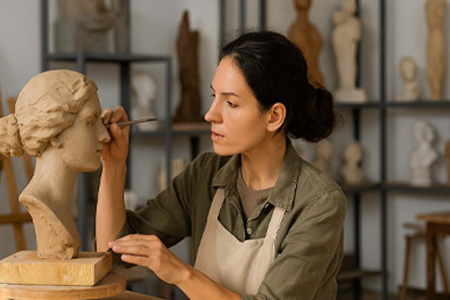
The history of sculpture in the world began in the Paleolithic era with the creation of fertility figurines, such as the Venus of Willendorf. In the civilizations of Egypt and Mesopotamia, colossal statues of gods and pharaohs were made for ritual and political purposes.
Ancient Greece brought the art of sculpture to its peak through naturalism and idealism, while Rome added realistic portraiture.
During the Middle Ages, sculpture became subordinate to church architecture, but the Renaissance revived classical human anatomy and human emotion once again. From the 19th century onward, sculpture broke free from the constraints of realism. With artists like Rodin, Brancusi, and modern movements, it moved toward abstraction, new materials, and personal concepts.
![statue]()
Types of sculptures in terms of technique and structure
1. Carved Sculptures (Subtractive Method)
- Materials: Stone (marble, basalt), wood, ivory.
- Process: Carving and cutting away material from a single solid block (subtractive method).
- Example: Michelangelo's David – carved from a single large block of marble.
2. Metalworking Sculptures (Casting Method)
- Materials: Bronze, iron, gold.
- Process: A mold is made from a wax model (lost-wax casting method), then molten metal is poured into the mold.
- Example: Rodin's The Thinker – cast in bronze.
3. Structural Sculptures (Assemblage Method)
- Materials: Sheet metal, wood, found objects.
- Process: Cutting, bending, and welding separate pieces together (a combination of subtractive and additive methods).
- Example: Pablo Picasso's figurative sculptures – made from sheet metal and wire.
4. Solid Sculptures (Modeling/Plastic Method)
- Materials: Clay, plaster, wax, paper pulp.
- Process: Gradually adding and shaping a soft material (additive method). Requires firing or hardening.
- Example: Henry Moore's Wave sculptures – the original models were made in plaster.
5. Modern Sculptures (3D Printing Method)
- Materials: Plastic, resin, powdered metal.
- Process: Digital layer-by-layer deposition from a 3D file (digital additive method).
- Example: Contemporary parametric sculptures found in digital art exhibitions.
![statue]()
Materials and materials in sculpture
1. Stone (Marble, Sandstone, Basalt)
Characteristics: Very durable, heavy, requires carving tools and significant time.
Example: Ancient Greek sculptures such as the Venus de Milo – lasting thousands of years against natural elements.
2. Wood (Oak, Walnut, Sycamore, Ebony)
Characteristics: Lighter than stone, carveable and shapeable, sensitive to moisture and insects.
Example: African ritual sculptures and the Madonna and Child sculptures from the Middle Ages.
3. Metal (Bronze, Iron, Copper, Gold)
Characteristics: Highly durable, castable and weldable, heavy, with a unique metallic luster.
Example: Donatello’s David (bronze) and the Statue of Liberty in New York (copper sheets).
4. Clay and Earthenware
Characteristics: Soft and flexible, inexpensive, requires kiln firing for permanence.
Example: Fertility figurines from the Indus Valley Civilization and ancient Chinese terracotta sculptures (the Terracotta Army).
5. Plaster
Characteristics: Inexpensive, lightweight, moldable, dries quickly, brittle, suitable for making preliminary models.
Example: Preliminary models created by sculptors in Renaissance workshops.
6. Found Objects and Recycled Materials
Characteristics: Creative and conceptual, includes metal parts, plastic, fabric, gears, and used items.
Example: Jean Tinguely’s "Miserables" sculptures (made from machine and bicycle parts).
7. Synthetic and Modern Materials (Plastic, Fiberglass, Resin)
Characteristics: Lightweight, corrosion-resistant, highly moldable, reasonably priced.
Example: Contemporary sculptures in urban spaces, such as works by Jeff Koons (mirror-polished stainless steel and plastic, like the Rabbit).
![statue]()