What is a Carpet?
06/21/2021
Reading time: 5
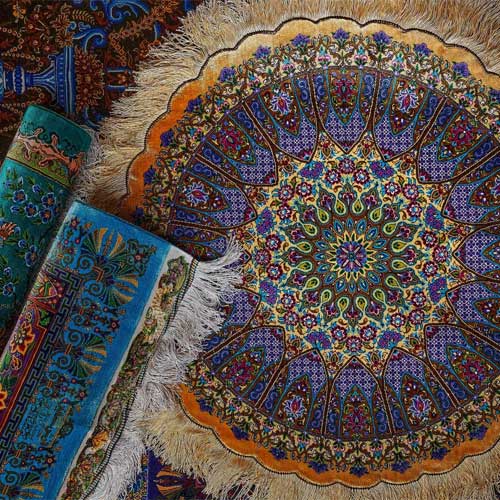
As one of the oldest and most authentic human achievements, a carpet is a type of floor covering woven from natural or synthetic fibers. Beyond its primary function—covering and protecting the floor against cold, moisture, and wear—it plays a role far beyond that of a simple object.
This artistic-industrial product, rooted in nomadic and rural civilizations, has evolved over thousands of years into a tapestry of creativity, identity, beliefs, symbols, and the technical skill of its weavers.
A handwoven carpet is typically made on a loom by tying short strands of yarn (weft and warp) around vertical threads. Knot density, fiber type (such as wool, silk, or cotton), the kind of dyes used (natural or chemical), and the authenticity of the design and pattern are the most important indicators of a carpet’s quality and value.
On the other hand, machine-made carpets utilize modern technology and industrial fibers like acrylic or polypropylene, making mass production and more affordable prices possible. Nevertheless, due to their uniqueness, delicacy, cultural heritage, and value as an asset, handwoven carpets continue to hold a lofty and symbolic place in both Iranian and global culture.
In other words, a carpet is not just a floor covering; it is a woven document of the history, art, economy, sociology, and even psychology of different peoples—one in which every knot and every color has a story to tell.
![carpet]()
History of the Carpet
The history of the carpet dates back thousands of years before Christ, and the oldest surviving example is the Pazyryk Carpet, discovered in 1949 in the Altai Mountains of Siberia. This carpet dates back to the 5th century BCE (the Achaemenid period). Woven with symmetrical knots and featuring designs such as deer and horsemen, it demonstrates the advanced weaving techniques present on the Iranian Plateau.
There is also evidence of carpet weaving among the nomadic tribes and early civilizations of Mesopotamia, Egypt, and China. In ancient times, carpets were primarily used as warm, soft floor coverings for tents and palaces. However, as civilizations developed, they gradually became symbols of wealth, power, and art.
The golden age of Persian carpet weaving flourished during the Safavid era (10th to 12th centuries AH). During this period, cities such as Tabriz, Isfahan, Kashan, and Kerman became major centers of carpet production. Classical designs such as the Lachak Toranj (corner-and-medallion), Shah Abbasi, and Afshan (scattered floral) patterns reached their peak of perfection, using natural dyes and high-quality fibers like wool and silk.
After the decline of the Safavid dynasty, Persian carpets experienced a revival during the Qajar period, influenced by foreign trade and the growing demand of Western markets. In the 20th century, the emergence of machine-made carpets in Europe and later in Iran brought about a major transformation in the methods of production and consumption.
Today, the history of carpets is not merely a narrative of advances in weaving and dyeing technology; it is also a complete reflection of the social, cultural, and economic transformations of human societies.
![carpet]()
Types of Carpets by Material and Structure
Below are the different types of carpets categorized by fiber material and production method.
By Fiber Material:
- Wool Carpets: The most common type. Soft, durable, and ideal for cold climates.
- Silk Carpets: Very soft and shiny, delicate, expensive, and suitable for luxury and decorative spaces.
- Cotton Carpets: Lightweight, easy to wash, affordable, but less durable than wool.
- Acrylic Carpets (Machine-Made): Wool-like feel, soft, hypoallergenic, reasonably priced, and available in a wide range of colors.
- Polypropylene Carpets (BCF): Resistant to stains and moisture, lightweight, and suitable for high-traffic areas.
- Viscose Carpets (Artificial Silk): Shiny and soft, similar to natural silk, but sensitive to moisture and pressure.
By Structure and Production Method:
- Handwoven Carpets: Woven by hand on a loom. Features irregular knots and artistic authenticity. Long lifespan and holds investment value.
- Machine-Made Carpets: Mass-produced using industrial machinery. Uniform texture, affordable price, and available in many designs and colors.
- Kilim (Gelim): Flat-woven with no pile (flatweave). Lightweight, thin, washable, and suitable for simple or rustic spaces.
- Jajim: Woven with colorful strips. Thin, reversible (same on both sides), and characteristic of local and nomadic weaving traditions.
- Velvet Carpet (Velour): Features short, dense pile. Soft and smooth, ideal for bedrooms and calm spaces.
![carpet]()