10 Luxury Projects Using Custom Stone Surfaces Beautifully
09/28/2026
Reading time: 5
Luxury architecture is often defined by the details: the texture of a wall, the proportions of a staircase, the finish of a kitchen island, or the way natural architectural materials interact with light. Among the most enduring choices for high-end interiors and exteriors, custom stone surfaces offer a combination of beauty, durability, and design flexibility that few materials can match.
From dramatic residential kitchens to sculptural hotel lobbies, stone can be tailored to suit the character of almost any architectural concept. Bespoke fabrication, carefully selected slabs, distinctive finishes, and precision installation allow designers to turn stone into a defining feature rather than simply a functional surface.
Here are 10 examples of luxury projects where stone can be used to create memorable architectural spaces and provide inspiration for your next project.
1. Statement Kitchen Islands
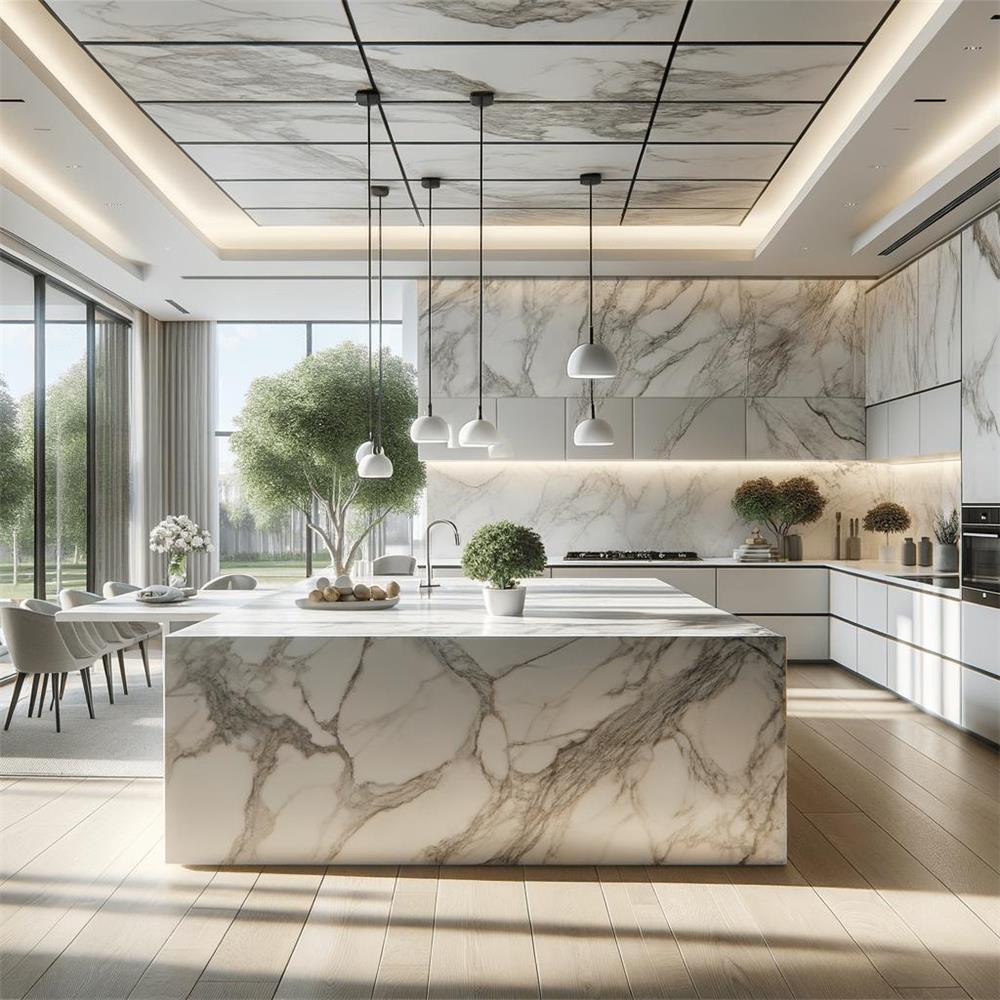
The kitchen island is one of the most prominent opportunities for incorporating stone into a luxury interior. A large island made from a carefully selected natural stone can become the focal point of the entire room.
Designers can use carefully selected natural stone slabs and bookmatching techniques to create continuous veining across the front and worktop, producing a dramatic visual effect. Waterfall edges, sculpted corners, integrated sinks, and bespoke profiles can further enhance the design.
For luxury residential projects, this is one of the most effective premium stone applications, combining everyday functionality with a strong architectural presence.
2. Sculptural Staircases
A staircase can become much more than a means of moving between floors. With precision fabrication, stone can be shaped into treads, risers, landings, walls, and even structural-looking sculptural elements.
A minimalist staircase in marble, limestone, or another carefully selected stone can create a sense of permanence and sophistication. Large-format pieces can help reduce visual interruptions, while contrasting materials such as timber, glass, or metal can create a contemporary aesthetic.
This approach demonstrates how architectural stone design can transform a practical feature into a major element of an interior.
3. Luxury Hotel Lobbies
![Luxury Hotel Lobbies]()
High-end hotels frequently use stone to establish a sense of arrival. Reception desks, feature walls, flooring, columns, bars, and seating areas can all incorporate bespoke stonework.
A dramatic veined marble reception desk, for example, can immediately communicate a sense of exclusivity. In contrast, textured limestone or travertine can create a warmer, more understated atmosphere.
The scale of hospitality projects also provides opportunities to combine different stone finishes within the same space. Polished surfaces can reflect light, while honed or textured finishes introduce depth and tactile contrast.
4. Bespoke Bathroom Retreats
Luxury bathrooms offer another opportunity to use stone across multiple surfaces. Walls, floors, vanity units, shower areas, bath surrounds, and shelving can be designed as a cohesive composition.
Using the same or complementary stone across several elements can create a seamless appearance. Large slabs can minimise grout lines, while carefully planned veining can create a continuous visual flow.
For homeowners and designers seeking stone project inspiration, a bespoke bathroom is an excellent example of how material selection and fabrication can work together to create a sophisticated environment.
5. Feature Fireplace Surrounds
Fireplaces have long been associated with luxury interiors, and custom stone can give them a distinctive architectural identity. A substantial marble surround can create a classical feel, while a simple limestone frame can complement a contemporary interior. For a more dramatic approach, a full-height stone fireplace wall can become a sculptural centerpiece.
The stone can be selected to complement surrounding materials, furniture, flooring, and lighting. This allows the fireplace to feel integrated into the architecture rather than added as a separate decorative feature.
6. Bespoke Reception and Bar Areas
Private residences, restaurants, members’ clubs, and hospitality spaces can use stone to create distinctive reception counters and bars.
A custom-fabricated stone bar can incorporate curved edges, integrated lighting, shelving, sinks, and other functional elements. Veined natural stone can provide a dramatic backdrop, while a textured finish can give a more contemporary and tactile appearance.
These applications demonstrate the versatility of custom stone surfaces beyond conventional countertops. With the right fabrication techniques, stone can be formed around the requirements of a highly individual space.
7. Dramatic Feature Walls
Feature walls are an effective way to introduce natural stone without covering an entire interior in the material.
A carefully selected slab can be positioned to showcase distinctive veining, color variation, or geological patterns. Backlighting can also be used with suitable translucent materials to emphasise the stone’s natural characteristics.
In luxury residential interiors, feature walls are particularly effective in entrance halls, dining rooms, living spaces, and master suites.
The result is an example of luxury architecture materials being used not simply for construction, but as part of the visual identity of the space.
8. Outdoor Terraces and Entertaining Areas
The use of stone doesn’t have to stop at the interior. Luxury properties can extend carefully considered stone palettes into outdoor spaces.
Terraces, outdoor kitchens, pool surrounds, steps, retaining walls, and seating areas can all incorporate natural or engineered stone, depending on the project’s requirements.
Using complementary materials indoors and outdoors can create a stronger visual connection between the two environments. Large-format paving and carefully detailed transitions can make an outdoor entertaining area feel like a natural extension of the interior.
When selecting stone for exterior applications, factors such as weather exposure, slip resistance, maintenance, and the intended finish should be considered alongside appearance.
9. Bespoke Dining Tables and Furniture
![Bespoke Dining Tables and Furniture]()
Stone can also be transformed into furniture and decorative architectural elements.
A custom dining table with a sculptural stone base and carefully selected slab can become the centrepiece of a dining room. Side tables, consoles, benches, plinths, and occasional furniture can also be fabricated from stone to create a consistent material language.
This type of project highlights the potential of premium stone applications when designers move beyond traditional architectural surfaces.
Instead of simply covering an existing structure, the stone itself becomes the object.
10. Bespoke Commercial and Retail Interiors
Luxury retail environments rely heavily on materials to communicate brand identity and create memorable customer experiences.
Stone can be incorporated into display plinths, counters, walls, flooring, staircases, changing areas, and feature installations. Bespoke fabrication makes it possible to develop details that reflect a particular brand’s aesthetic, from understated minimalism to highly dramatic interiors.
The durability and longevity of stone can also make it suitable for areas that experience significant footfall, provided the material and finish are selected appropriately.
For architects and interior designers, commercial spaces offer extensive opportunities for architectural stone design and innovative material combinations.
How to Choose Stone for a Luxury Project
![How to Choose Stone for a Luxury Project]()
The right stone is about more than colour. Several factors should be considered before selecting a material for a bespoke project.
Consider the application
A kitchen countertop, bathroom wall, fireplace, exterior terrace, and feature wall can have very different technical requirements. The intended application should guide the choice of material and finish.
Think about the overall design
Stone should complement the architecture rather than compete with it. Consider how the material will interact with timber, metal, glass, plaster, lighting, and other finishes.
Study the slab carefully
Natural stone is unique, with variations in colour, veining, movement, and texture. Viewing the actual slab can be particularly important for projects where the stone will be a major visual feature.
Plan the fabrication early
Complex projects may involve bookmatching, mitred edges, curved elements, integrated sinks, concealed joints, or unusual profiles. Early collaboration between the architect, designer, stone supplier, fabricator, and installer can help ensure the design is achievable.
Consider maintenance and longevity
Luxury materials should be selected with their long-term performance in mind. Factors such as porosity, staining, sealing, scratching, cleaning requirements, and exposure to moisture or weather can influence which stone and finish is appropriate.
Creating Your Own Custom Stone Surface
![Creating Your Own Custom Stone Surface]()
The most successful luxury stone projects begin with a clear understanding of how the material will contribute to the overall architecture.
Whether you’re designing a private residence, hotel, restaurant, retail environment, or commercial space, custom stone surfaces can provide a distinctive combination of natural beauty and bespoke craftsmanship.
From statement kitchen islands and sculptural staircases to feature walls, luxury bathrooms, and outdoor terraces, the possibilities extend far beyond conventional stone applications.
The key is to select the right material, finish, fabrication method, and detailing for the space. With thoughtful planning, stone can become one of the defining elements of a project rather than simply another surface.
Frequently Asked Questions
What are custom stone surfaces?
Custom stone surfaces are architectural or interior elements fabricated specifically for a particular project. They can include countertops, walls, flooring, staircases, fireplaces, furniture, bars, reception desks, and other bespoke features.
What stone is commonly used in luxury architecture?
Marble, limestone, granite, travertine, quartzite, and other natural stones can all be used in luxury architecture. The most suitable option depends on the application’s technical requirements, design objectives, maintenance expectations, and budget.
What are premium stone applications?
Premium stone applications include bespoke kitchen islands, luxury bathroom surfaces, feature walls, staircases, fireplaces, reception desks, bars, furniture, and other architectural elements where stone is fabricated to specific design requirements.
How can stone make an interior feel more luxurious?
Stone can introduce natural variation, texture, depth, and a sense of permanence. Bespoke fabrication can also create seamless details, distinctive profiles, bookmatched patterns, and sculptural forms that make the material an integral part of the architecture.
Where can I find stone project inspiration?
Looking at completed residential, hospitality, commercial, and retail projects can help identify possibilities for material selection, finishes, fabrication details, and architectural applications. Studying the relationship between stone, lighting, surrounding materials, and the overall architecture can be particularly useful when developing a bespoke concept.