Marble vs Porcelain Slabs: Which Is Better for Luxury Interiors?
07/21/2026
Reading time: 5
When designing a luxury home or commercial space, choosing the right architectural materials is one of the most important decisions. Both natural marble and porcelain slabs have become popular choices for architects, interior designers, and homeowners seeking elegant, durable, and timeless interior surfaces. But when comparing marble vs porcelain slabs, which option truly delivers the best value for luxury interiors?
The answer depends on your design goals, maintenance preferences, budget, and intended application. While natural marble offers unmatched beauty and individuality, porcelain slabs provide exceptional durability and low maintenance. Understanding the strengths of each material will help you select the perfect stone surfaces for your project.
What Are Natural Marble Slabs?
Natural marble is a metamorphic stone formed over millions of years under intense heat and pressure. Every slab features unique veining, color variations, and patterns, making each installation one of a kind.
For centuries, marble has been associated with luxury, appearing in palaces, museums, hotels, and high-end residences worldwide. Its timeless elegance makes it a preferred choice for premium countertops, feature walls, fireplaces, bathrooms, and luxury flooring materials.
Advantages of Natural Marble
![Advantages of Natural Marble]()
- Unique veining and natural patterns
- Premium, luxurious appearance
- Adds long-term property value
- Cool surface, ideal for warm climates
- Suitable for floors, walls, vanities, and decorative features
However, marble is a porous material that requires periodic sealing and proper maintenance to preserve its beauty.
What Are Porcelain Slabs?
Porcelain slabs are engineered surfaces manufactured using refined clay and minerals fired at extremely high temperatures. Modern technology allows porcelain to replicate the appearance of marble, granite, concrete, wood, and other materials with remarkable realism.
Large-format porcelain slabs have become increasingly popular in modern architecture due to their strength, consistency, and versatility.
Porcelain Slab Benefits
Many designers choose porcelain because of its impressive performance characteristics. Key porcelain slab benefits include:
- Highly resistant to scratches and stains
- Non-porous and hygienic
- Minimal maintenance required
- UV resistant for indoor and outdoor applications
- Lightweight compared to some natural stones
- Available in large formats with minimal grout lines
These advantages make porcelain particularly attractive for busy households and commercial environments.
Marble vs Porcelain Slabs: Key Differences
Although both materials create stunning interiors, there are several important differences.
Appearance
Natural marble offers authentic veining and depth that cannot be perfectly replicated. Every slab is unique, making it ideal for statement interiors.
Porcelain slabs provide a consistent appearance and are available in a wide range of marble-inspired designs. While high-quality porcelain closely resembles natural stone, it lacks the organic variation found in genuine marble.
Durability
Porcelain is generally more resistant to scratches, moisture, chemicals, and everyday wear.
Natural marble is durable but softer and more susceptible to scratching and etching from acidic substances such as lemon juice or vinegar.
Maintenance
Marble requires routine sealing and careful cleaning with pH-neutral products.
Porcelain requires very little maintenance, making it a practical option for high-traffic areas.
Installation
Both materials require professional installation. However, porcelain slabs often require specialized cutting equipment due to their hardness, while marble demands experienced craftsmanship to showcase its natural beauty.
Cost
Natural marble typically commands a higher price because it is quarried from natural deposits and each slab is unique.
Porcelain often offers a more budget-friendly alternative while still delivering a luxurious aesthetic.
Which Material Is Best for Luxury Interiors?
![Which Material Is Best for Luxury Interiors?]()
When deciding between marble vs porcelain slabs, consider where the material will be used.
Choose natural marble if you value:
- Authentic luxury
- Unique natural patterns
- Long-term prestige
- High-end architectural appeal
Choose porcelain if you prioritize:
- Low maintenance
- Superior stain resistance
- High durability
- Cost-effective luxury
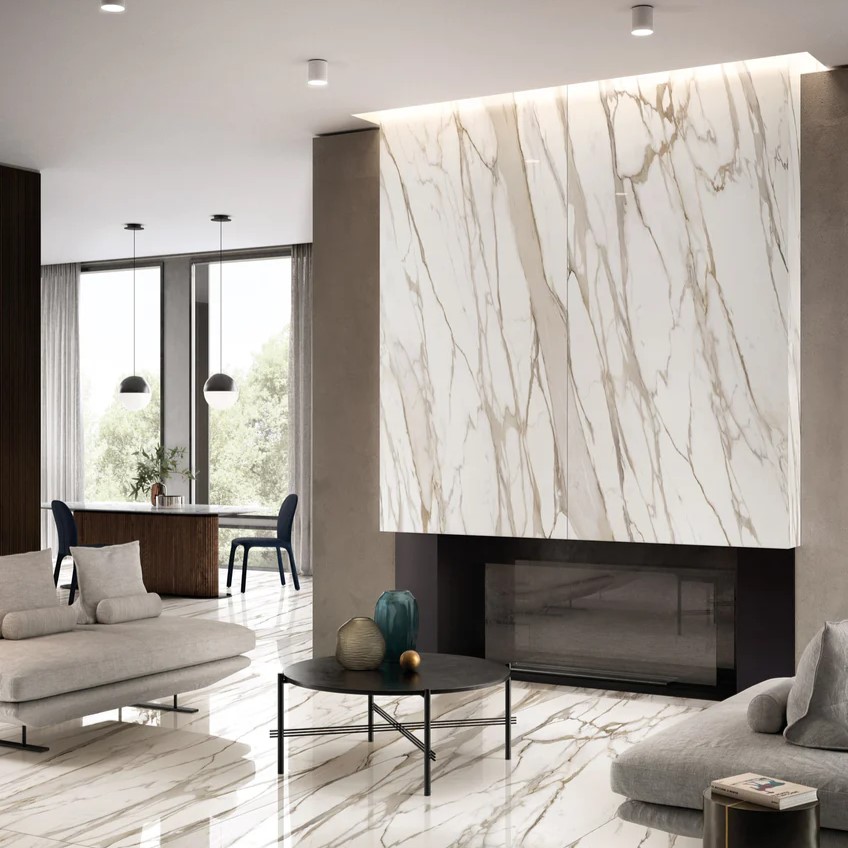
Many luxury interior designers combine both materials. Marble may be selected for statement walls, fireplaces, and formal spaces, while porcelain is used for kitchens, bathrooms, and high-traffic areas where durability is essential.
Choosing the Right Stone Surfaces for Your Project
The best stone surfaces are those that align with your lifestyle, design vision, and maintenance expectations. Whether you’re creating elegant living rooms, luxurious bathrooms, or sophisticated commercial interiors, selecting the appropriate interior surfaces can significantly influence both aesthetics and functionality.
If timeless beauty and natural character are your priorities, natural marble remains an unmatched choice. If performance and ease of maintenance are more important, porcelain slabs offer a modern solution without compromising on style.
Final Thoughts
There is no universal winner in the debate over marble vs porcelain slabs. Both materials have distinct advantages and can elevate luxury interiors when used appropriately.
Natural marble continues to symbolize sophistication and exclusivity, making it a favorite for premium residential and hospitality projects. Meanwhile, porcelain slabs provide outstanding durability, practicality, and design flexibility.
Ultimately, the ideal choice depends on your project’s specific requirements. By understanding the characteristics of both materials, you can confidently invest in beautiful, high-quality interior surfaces that will enhance your space for years to come.